
Laser therapy that helps you heal from the inside out
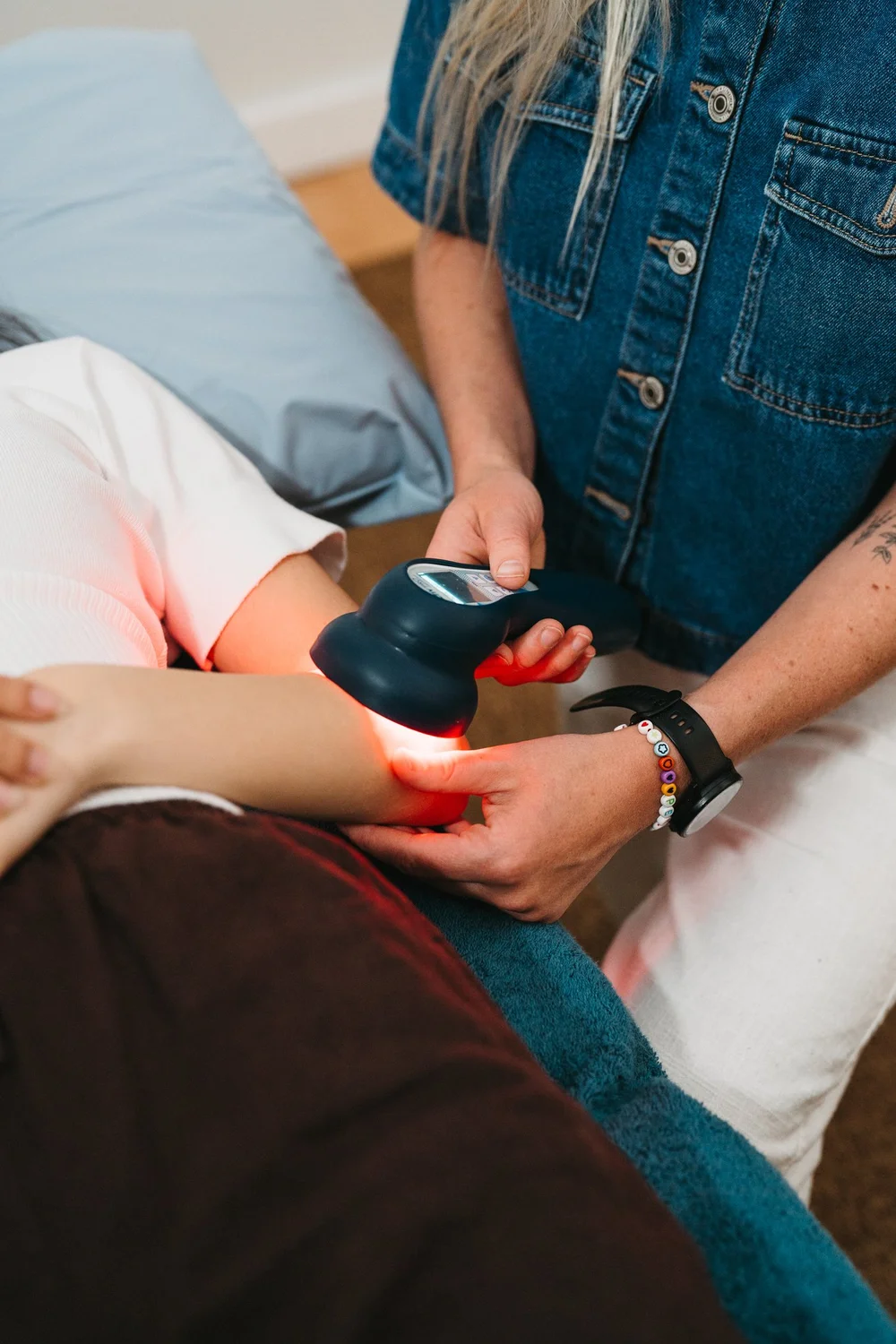
Our Multi Radiance super pulsed laser energises your cells’ mitochondria to support healing, calm pain and inflammation, and get you moving sooner. It’s painless, quick — and a powerful part of your osteopathic care.
- Painless & non-invasive
- Included in your consultation
- Multi Radiance super pulsed technology
A clinical tool that works where healing starts — in your cells
Low-level laser therapy (also called photobiomodulation) uses specific red and near-infrared light to switch on your body’s own repair processes. It doesn’t cut, burn or heat — it works through biology.
We use it every day because it makes a real difference to how our patients feel and recover:
- It fuels healing at the source. Laser energises the mitochondria in your cells, giving injured tissue the energy it needs to repair.
- It calms pain and inflammation. Sore, inflamed areas settle, so treatment and movement feel easier.
- It makes everything else work better. Laser is a brilliant adjunct to hands-on osteopathy and rehab — less pain means you can do more, sooner.
- It’s perfect when an area is too sore to touch. We can start helping the tissue heal even when hands-on work needs to be gentle.
- It’s part of your care. When it suits your treatment, laser is included in your consultation — no extra cost.
How laser helps you heal
It’s called photobiomodulation — light that changes how your cells behave. Here’s what happens when we treat an injured area:
Light reaches deep
Red and near-infrared light passes through the skin into muscles, tendons, ligaments and joints — right to where the injury is.
Mitochondria power up
An enzyme in your mitochondria absorbs the light and kick-starts the cell’s energy production.
Cells get to work
With more energy (ATP) available, cells switch on repair, protection and anti-inflammatory processes.
You heal & move better
Inflammation settles, pain eases and tissue repair gets underway — so you can get back to moving.
Dose is everything — and our Multi Radiance laser delivers a precise, measured dose to exactly where you need it.
The Multi Radiance super pulsed laser
Not all lasers are created equal. We chose Multi Radiance super pulsed technology because it reaches deep, works fast and stays comfortable.
- Super pulsed 905 nm laser. Extremely short, high-powered pulses — billionths of a second long — drive energy deep into the tissue without heating the skin.
- Multiple wavelengths in one. Super pulsed laser combined with infrared and red light treats every layer, from the surface down to deep joints and tendons.
- Deep reach, no heat. Comfortable even on deeper areas like the hip, lower back and shoulder.
- Precise, measured dosing. Built-in programs deliver the right dose to the right tissue, every time.
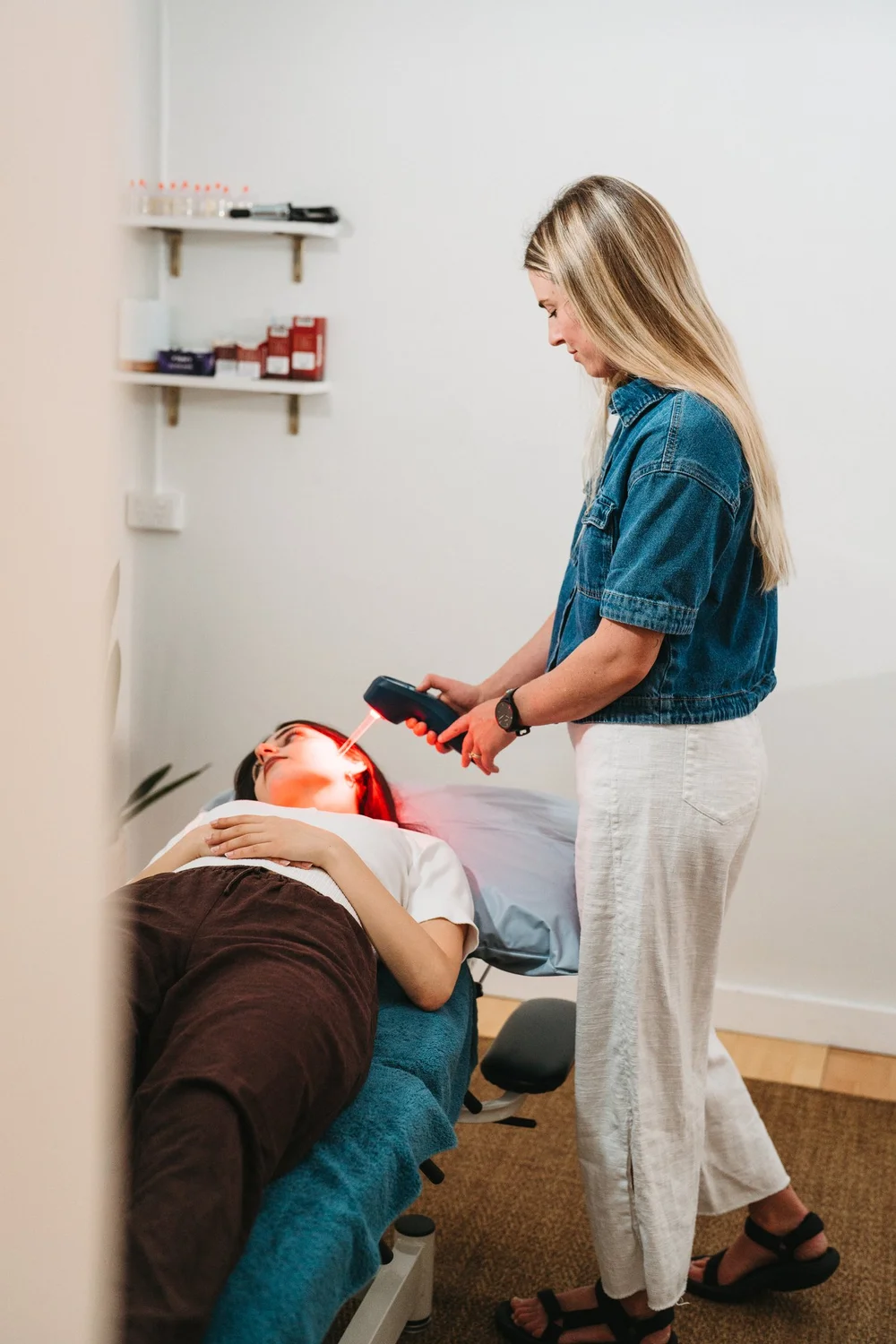
How we use it in your treatment
Laser is at its best as part of a complete plan — paired with hands-on treatment, NeuFit and exercise.
Assess
We find what’s driving your pain and where laser will make the biggest difference.
Target
We treat directly over the injured tendon, joint or muscle — usually a few minutes per area.
Combine
Laser plus hands-on osteopathy, NeuFit and exercise — so you heal and get stronger at the same time.
Progress
We use laser over a course of sessions and track how you’re improving every visit.
Conditions we commonly use it for
What laser can do for you
A great adjunct to your osteopathic care — and one of our patients’ favourite parts of treatment.
Boosts cellular energy
Laser light fuels your mitochondria — the power plants of your cells — so they make more of the energy (ATP) your body uses to repair.
Supports faster tissue repair
With more energy on board, cells in muscles, tendons and joints get on with healing — helping you recover sooner.
Calms pain & inflammation
Laser settles inflammation and quietens pain signals, so sore areas feel easier and move more freely.
Gets you moving sooner
Less pain means you can start loading and strengthening earlier — making your rehab more effective.
Reaches deep, stays cool
Super pulsed technology drives energy deep into the tissue without heating the skin.
Quick & painless
A few minutes per area, nothing to feel but a gentle warmth — and no downtime.
Used in clinics and elite sport worldwide, and studied in hundreds of clinical trials.
Common questions
Does laser therapy hurt?
Not at all. Most people feel nothing, or a gentle warmth. It’s completely painless — no needles, no downtime, and you can get straight back to your day.
Does laser cost extra?
No. When it suits your treatment, laser is included in your osteopathic consultation — it’s part of your care, not an add-on.
How long does a laser treatment take?
Just a few minutes per area, built right into your appointment alongside hands-on treatment and exercise.
How many sessions will I need?
It depends on your injury and how long you’ve had it. Laser works best as a course over several sessions, and we track your progress every visit.
Is it the same as red light therapy at home or at the gym?
No. Our clinical-grade Multi Radiance super pulsed laser delivers far more targeted energy, deeper into the tissue, at a precise dose for your injury — something home and gym panels simply aren’t designed to do.
Can I claim on my private health insurance?
Osteopathy consultations are covered by most extras policies, and we offer on-the-spot claiming through HICAPS. Check with your fund for your level of cover.
Is laser therapy safe?
Yes — it’s gentle, painless and non-invasive, and everyone wears protective glasses during treatment. We check your health history first, and don’t use laser over the eyes, the thyroid, a known cancer, or the abdomen during pregnancy, or if you have photosensitive epilepsy or take light-sensitising medication.