
Back & neck pain treatment in Pennant Hills
Whether it’s a sudden twinge, a stiff neck from the desk, or pain that’s hung around for months, we look past where it hurts to find what’s driving it — then build a clear plan to get you moving with confidence again.
- No GP referral needed
- AHPRA-registered osteopaths
- HICAPS on-the-spot claims
Back & neck pain is common — and usually very treatable
Most of us will deal with back or neck pain at some point. It can be frightening, especially when it comes on suddenly, but in the vast majority of cases it isn’t caused by serious damage — and it usually improves with the right care.
Here’s what we believe, and what the research supports:
- Pain doesn’t always equal damage. Sensitive tissues and a protective nervous system can cause a lot of pain without anything being “out of place”.
- The sore spot isn’t always the cause. Stiff hips, an upper back that doesn’t move, old injuries, or how you sit and lift can all overload your back and neck.
- Movement is medicine. Staying gently active speeds recovery — long periods of rest usually make things worse.
- Scans rarely change the plan. Most back and neck pain doesn’t need an X-ray or MRI. We’ll refer you if yours does.
- Hands-on care works best with a plan. Treatment eases pain and restores movement; exercise and education help stop it coming back.
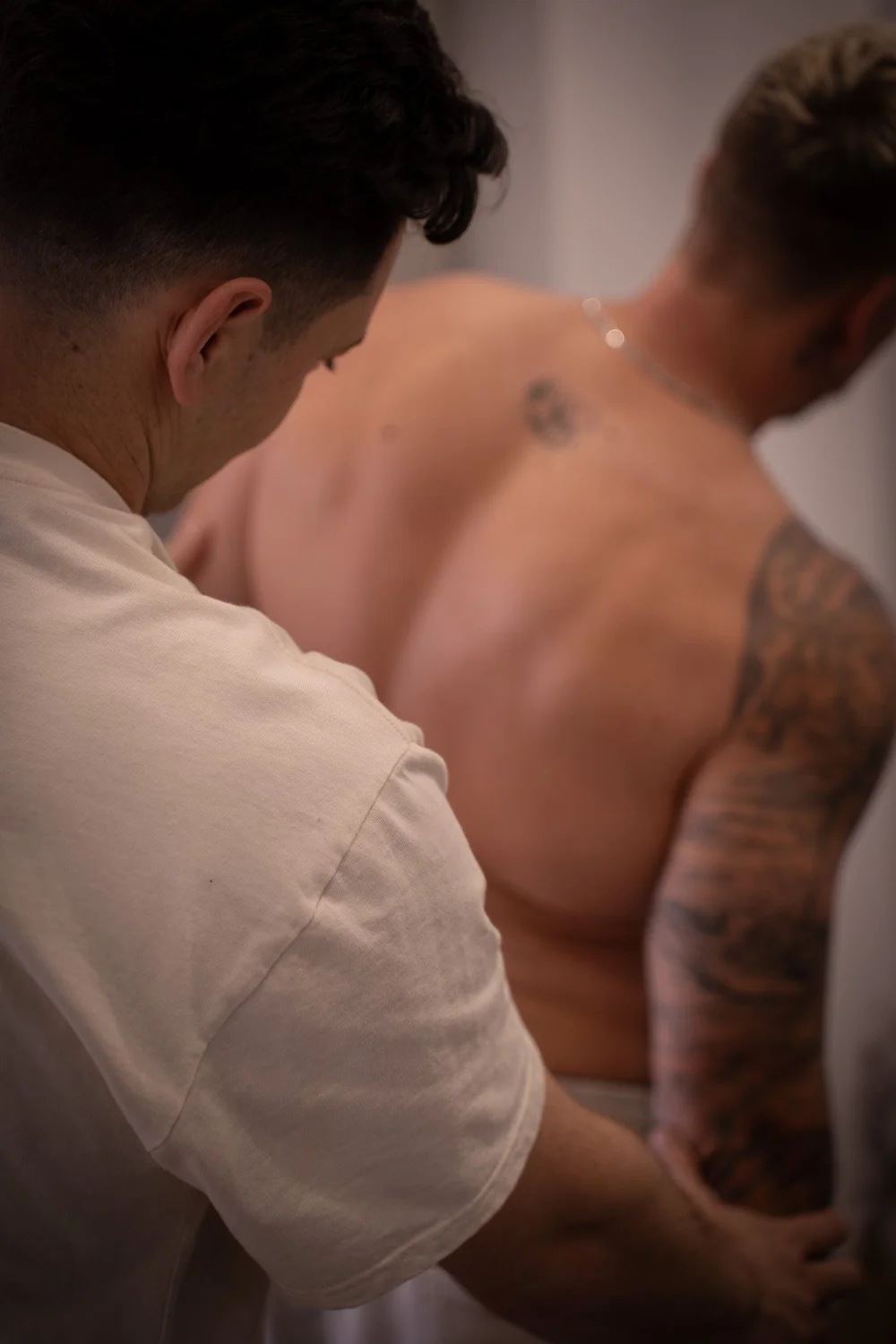
Back & neck problems we commonly help with
Everyone’s pain is different, but these are some of the issues we see most often:
- Lower back pain & stiffness
- Disc irritation & sciatica
- Neck pain & stiffness
- Desk & posture-related pain
- Upper back & rib pain
- Acute strains & “locked” backs
- Whiplash-type injuries
- Headaches coming from the neck
- Pregnancy & postpartum back pain
- Sport & gym-related back pain
Not sure if your pain fits? Give us a call on 0457 796 468 and we’ll let you know if we can help.
How we treat back & neck pain
Every appointment follows our Assess, Plan, Treat framework — so you always know what’s happening and why.
Assess
We start with your story — when it started, what eases it, and how it’s affecting your life.
Read more
Then we look at how you move: orthopaedic and movement testing, a neurological check of nerves, strength and reflexes where needed, and screening for anything that needs a doctor’s input.
We look beyond the painful area — hips, ribs, upper back and shoulders often play a role.
Plan
You’ll leave knowing what’s going on, what we’ll do about it, and roughly how long it should take.
Read more
We explain your diagnosis in plain English, set goals that matter to you — sleeping through the night, sitting at work, getting back to the gym — and map out the stages of your care.
Your plan includes simple home exercises and practical advice for work, sleep and lifting.
Treat
Hands-on treatment to ease pain and restore movement, combined with rehab to build strength.
Read more
Depending on what you need, treatment may include:
- Soft tissue & myofascial release
- Joint mobilisation, and HVLA adjustments only where appropriate and with your consent
- Dry needling, cupping or scraping (IASTM)
- Low-light laser therapy
- NeuFit neuromuscular stimulation
- Exercise rehab to build strength and confidence
- Desk, sleep and lifting advice
Your osteopath will talk you through the options and tailor treatment to you.
What you can do right now
While you wait for your appointment, these simple steps help most people:
- Keep moving gently — short walks are great
- Avoid long periods of bed rest
- Change positions often and break up long periods of sitting
- Use heat to ease muscle tension if it feels good
- Return to your normal activities gradually
- Don’t panic — most flare-ups settle with the right care
When to see a doctor urgently
Back and neck pain is rarely serious, but please see your GP, go to an emergency department or call 000 if you have:
- Numbness around your groin, buttocks or inner thighs
- New difficulty passing urine, or loss of bladder or bowel control
- Worsening weakness or numbness in your legs or arms
- Pain after a significant fall or accident
- Fever, unexplained weight loss, or a history of cancer
- Severe pain at night that doesn’t ease with rest or changing position
- Neck pain with dizziness, double vision, slurred speech or trouble swallowing
Common questions
Do I need a GP referral to see an osteopath?
No. Osteopaths are primary healthcare practitioners, so you can book directly. If you have a Medicare Chronic Disease Management plan or a WorkCover claim, bring your referral to your first visit.
Can I claim on my private health insurance?
Osteopathy is covered by most extras policies, and we offer on-the-spot claiming through HICAPS. Check with your fund for your level of cover.
How many sessions will I need?
It depends on how long you’ve had the pain, what’s driving it and your goals. After your first assessment we’ll give you a realistic estimate and review your progress as we go.
Do I need an X-ray or MRI first?
Usually not. Most back and neck pain can be assessed and managed without imaging. If your assessment suggests a scan or a doctor’s review is needed, we’ll refer you.
Will you crack my back?
Only if it’s appropriate and you’re comfortable with it. HVLA adjustments are one option among many, and there are plenty of gentle techniques we can use instead.
About osteopathy · All conditions we treat · Meet our osteopaths